Which plan covers Paris?
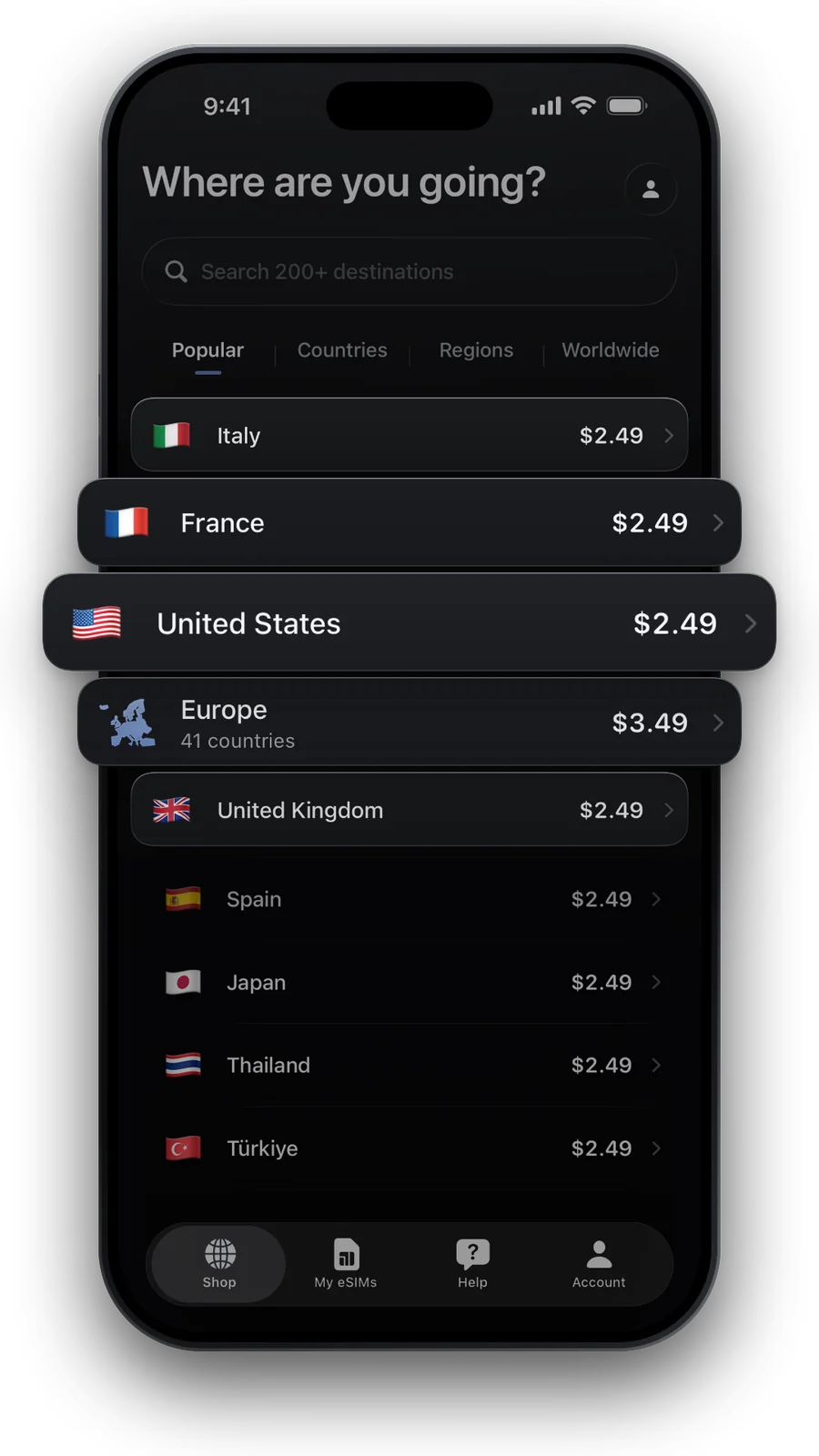
A France plan. Paris, Versailles, Lyon and the coast are all in France, and one plan works across the country. If you visit several European countries, a Europe plan can be easier, see the Europe eSIM guide. The networks your phone uses are shown below, live from our catalogue.
- Networks for FranceOrange
- SpeedUp to 5G on this network. Where there is no 5G, you connect over 4G/LTE.
Coverage is dense across Paris and the inner suburbs. Crowds at the Eiffel Tower, at big museums and at events can slow data, so download tickets and maps ahead.
Coverage around Paris
Paris is compact and busy. What to expect:
- Central Paris and Montmartre: strong signal in the streets, cafés and shops. Steep, narrow lanes are easier with a map open.
- Metro and RER: signal is good in stations and on many lines, while some tunnels can drop. Check your route before you go down.
- Museums and attractions: many sell timed tickets, so load them before you queue. Thick stone walls can weaken the signal inside.
- Versailles and day trips: a short train ride away. The towns have solid coverage, and the same France plan works.
Screenshot your museum and train tickets. A barcode from your photos opens fast, even where the signal is weak.
Arriving at Charles de Gaulle or Orly
Paris has two main airports: Charles de Gaulle (CDG) to the north-east and Orly (ORY) to the south. Your eSIM works at both.
- Switch it on after landing
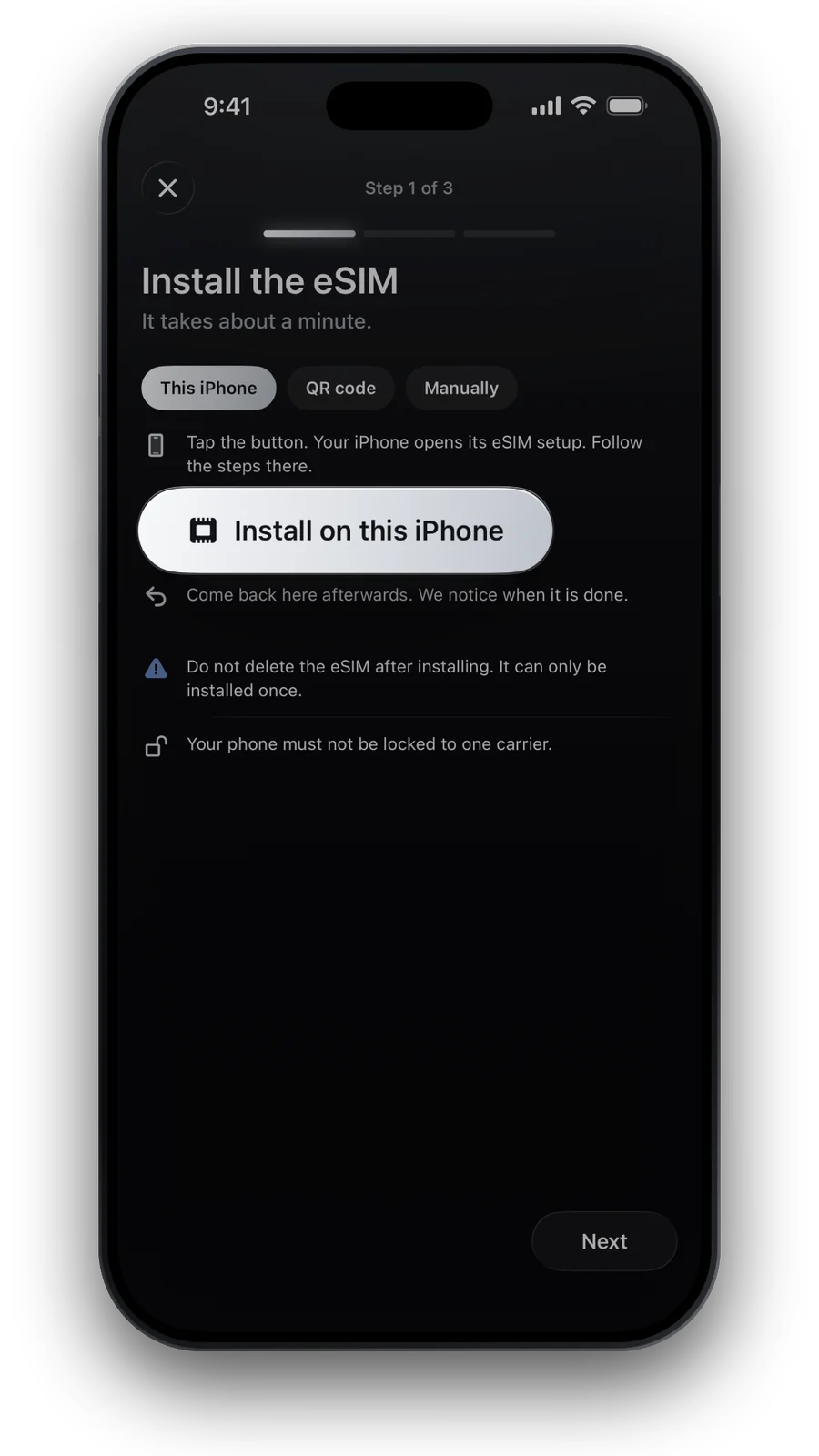
Turn off airplane mode, turn on data roaming for the eSIM line and choose it for mobile data. Calls and texts stay on your own SIM.
- Choose your way into town
Trains, buses and taxis connect both airports with the city. Your map app shows routes and times.
- Add your tickets and a ride app
Open your hotel booking and museum tickets, and see taxi and ride apps in Paris.
How much data for Paris
A city break uses little. Maps and tickets are light, while photos, videos and calls add up. See how much data you need, then pick a size below.
| What the phone does | |
|---|---|
| Metro and walking | Maps, route changes and live times |
| Museums | Mobile tickets, opening hours and audio guides |
| Cafés and dinner | Reviews, bookings and translation |
| Photos and messages | Upload on hotel Wi‑Fi to save data |
What you will use data for on a typical trip.
Prefer a daily allowance? 1 GB per day · 7 days for €7.49: full speed up to 1 GB a day, then 512 Kbps until the next day.
Picked like in our shop: the cheapest plan with about 0.7 GB a day. Live prices for France.

Good to know in Paris
- Coming from the EU or EEA? Your home plan may roam in France as it does at home, see EU roaming explained.
- Coming from outside the EU? Roaming rules differ by carrier, and an eSIM can be simpler, see how to avoid roaming charges.
- Free Wi‑Fi in cafés and museums can be slow and needs a sign-up. Keep the eSIM as your steady option.
- Keep your own SIM for calls and bank codes. See Dual SIM on iPhone.
Going on from Paris
The same France plan covers Lyon, Nice and Normandy. Heading to the UK by train, or to Spain? A France plan stays in France, so look at the UK eSIM guide or a Europe plan in the regions list.
Questions and answers
Do I need an eSIM in Paris?
It depends on your home plan. Visitors from outside Europe usually do. If you come from the EU or EEA, your own plan may already roam at no extra cost.
Does a France eSIM cover Paris and the rest of France?
Yes. One France plan covers Paris, the other cities and the countryside.
Does the eSIM work in the Paris metro?
In stations and on many lines, yes. A few tunnels can drop the signal, so check your route before you go underground.
Can I install the eSIM before I land at Charles de Gaulle?
Yes. Install it at home over Wi‑Fi, then switch it on after you land. Most France plans start when your phone first connects there.
Does it come with a French phone number?
No. The eSIM is data only. Your own SIM keeps your number for calls and texts.
Updated 24 Oct 2026 · checked against our live catalogue
How we check our data · Prices and plans come live from our catalogue; facts come from official sources, listed where we use them.