

Dates 2027: when do the cherry blossoms bloom?
Nobody knows the 2027 dates yet. Forecasts appear from January and change every week. Until then, your best guides are the normal dates of the Japan Meteorological Agency, the average of 1991 to 2020, and last year's real dates.
| First blossoms (normal) | Full bloom (normal) | Full bloom 2026 | |
|---|---|---|---|
| Fukuoka | 22 March | 31 March | 3 April |
| Tokyo | 24 March | 31 March | 28 March |
| Kyoto | 26 March | 4 April | 30 March |
| Osaka | 27 March | 4 April | 3 April |
| Sapporo | 1 May | 6 May | 24 April |
Normal = average 1991 to 2020. Source: Japan Meteorological Agency. 2027 dates are expected around these days, earlier after a warm winter.
Full bloom lasts about a week. Book flexible nights or a rail route that lets you follow the bloom north.
Where to see sakura in Japan
Most visitors combine Tokyo and Kyoto, then add Osaka or a day trip to Nara. If you arrive late, go north to Tohoku or Hokkaido, where the trees bloom weeks later.
- Tokyo: Ueno Park, Chidorigafuchi, Meguro River, Shinjuku Gyoen
- Kyoto: Philosopher's Path, Maruyama Park, Arashiyama
- Osaka: Osaka Castle Park, the Mint Bureau walkway
- Later bloom: Hirosaki, Kakunodate, Sapporo
Crowded parks and slow mobile data
On sunny weekends thousands of people picnic in the same park, and all of them share the nearest cell towers. Uploads get slow first. Send big videos from your hotel Wi-Fi and keep live maps and messages for the park.
- Networks for JapanKDDI/au, NTT docomo, Rakuten Mobile and SoftBank
- SpeedUp to 5G on all four networks. Where there is no 5G, you connect over 4G/LTE.
Apps for a sakura trip
- Bloom forecastSeveral Japanese weather services publish a sakura forecast with a map. Check it each morning.
- Google MapsTrain routes, platforms and walking times work well in Japan.
- IC card in your walletSuica or PASMO on the phone pays trains and convenience stores, see IC cards.
- TranslationCamera translation helps with menus and festival stall signs.
More picks are in our Japan travel apps guide.
How much data for a cherry blossom trip
| Light: maps, messages | Typical: plus photos, social | Heavy: plus video calls | |
|---|---|---|---|
| 7 days | about 2.1 GB | about 4.9 GB | about 10 GB |
| 10 days | about 3 GB | about 7 GB | about 15 GB |
| 14 days | about 4.2 GB | about 9.8 GB | about 21 GB |
Rule of thumb: 0.3, 0.7 or 1.5 GB a day.
Prefer a daily allowance? 1 GB per day · 7 days for €11.49: full speed up to 1 GB a day, then 256 Kbps until the next day.
Picked like in our shop: the cheapest plan with about 0.7 GB a day. Live prices for Japan.
Get your Japan eSIM ready before you fly
- Check that your phone takes an eSIM: compatible phones.
- Pick a Japan plan for all your days.
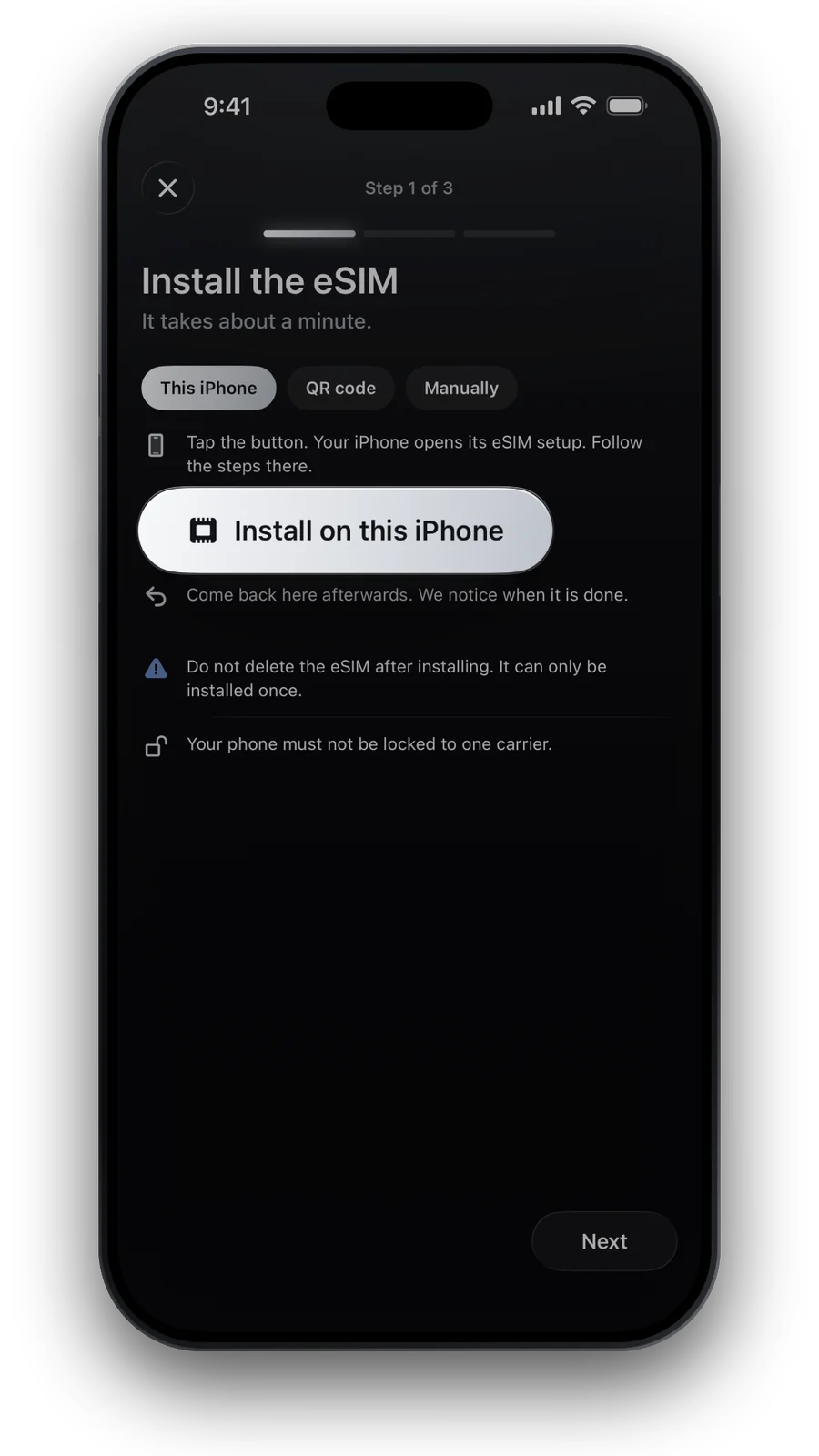
- Install it at home over Wi-Fi.
- Land, switch on data roaming for the eSIM line, and you are online at the gate.
Questions and answers
When is cherry blossom season in Japan 2027?
The official 2027 dates are not known yet. In a normal year Tokyo blooms from 24 March with full bloom on 31 March, Kyoto and Osaka a few days later, Sapporo in early May.
What is the best week for a Japan cherry blossom trip?
For Tokyo and Kyoto in one trip, the last days of March and the first days of April are the safest bet. Check the forecasts from January.
Do I need a Japanese SIM card for sakura season?
No. An eSIM gives you Japanese mobile data and your own SIM keeps your number. Calls and messages work over apps.
Is mobile data slow in the parks?
It can be on sunny weekends when parks are full. Maps and messages usually still work; big uploads are better from Wi-Fi.
Can I share data with my travel partner?
Yes. Turn on the personal hotspot, see eSIM hotspot. A larger plan for two phones still uses one eSIM.
Updated 18 Nov 2026 · checked against our live catalog
How we check our data · Prices and plans come live from our catalog; facts come from official sources, listed where we use them.
Sources: Japan Meteorological Agency: first bloom dates 2021 to 2026 and normals · Japan Meteorological Agency: full bloom dates 2021 to 2026 and normals